

Do not start or charge an electric vehicle that has been submerged. Stay clear of it and ask professionals about inspection and recovery. Water can leave electrical and fire hazards after the flood has receded and the vehicle looks dry.
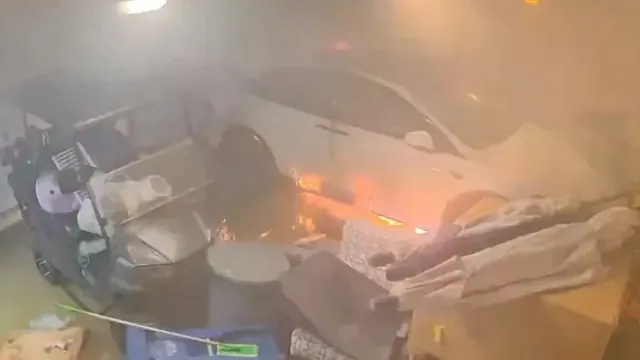
EV fires reported after Hurricane Helene in 2024 made that danger visible. One widely shared Florida story showed a Tesla burning in a garage following flooding. The report brought attention to the risk, but it did not establish every fire’s precise cause. Vehicle makers and safety authorities provide the guidance for what an owner should do next.
Saltwater can leave a hazard behind
Water receding is not the end of the concern for a flooded EV. Conductive salt residue can remain. The National Highway Traffic Safety Administration’s warnings cover high-voltage hazards in flood-damaged electric and hybrid vehicles, with saltwater exposure a particular problem.
Keep the risk in proportion to the evidence. Not every flooded EV catches fire. One reported incident does not reveal a rate for all vehicles, or show that EVs overall burn more frequently than other cars. That needs comparable data and exposure periods.
Do not try to inspect the high-voltage battery yourself. Contamination and damage can be out of sight, and a quiet car without smoke may still need professional assessment.
Plan before water reaches the vehicle
Before conditions deteriorate, follow local evacuation directions and the maker’s advice if moving the vehicle somewhere safer. Do not wade into rising water to save it. A car is not a reason to put a person at risk.
A flood warning gives you time to consider transport and power interruptions. Charging may be unavailable during an outage, but running low on charge is not the same problem as flood damage to a battery. Plan for the appropriate situation.
Use current local information about roads. A widely shared Helene photograph cannot tell you whether a route will be safe in another storm.
After submersion, arrange safe recovery
Tesla’s submerged-vehicle guidance tells owners to contact their insurer and have an authorized shop inspect the vehicle before operation. Recovery should place its affected vehicles at least 50 feet from structures and other combustible material, using safe towing arrangements.
That calls for professional recovery, not driving the damaged car out yourself. Tell the service that the vehicle is electric and has been exposed to flooding. Follow the instructions of recovery professionals and emergency services.
If you own another make or model, consult its manufacturer’s guidance too. Keep people away from a car that is hot, smoking or making unusual noises, and call emergency services from a safe location. Do not go into a garage or approach the battery to investigate. Professional inspection comes before any decision to operate or charge a vehicle that has been submerged.