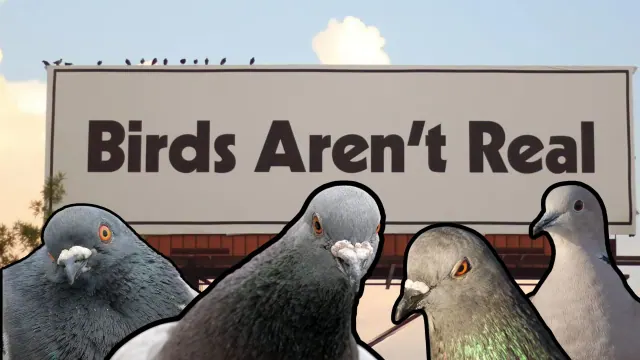
Yes, birds are real. Birds Aren't Real is a satirical movement built around the deliberately ridiculous claim that the government replaced them with surveillance drones. The people behind it are performing a conspiracy, not reporting a discovery.
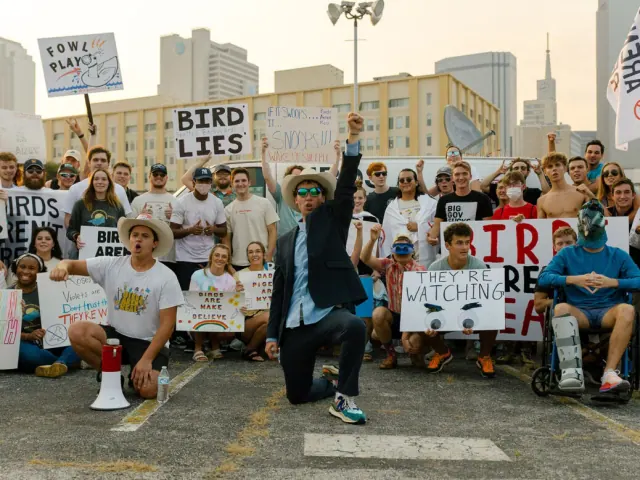
Its signs have appeared at rallies and on billboards, and the slogan works on a T-shirt without much explanation. The photographs here show the mix: ordinary pigeons, mock protests and a founder playing his part with a straight face. Understanding the joke makes those images much easier to read.
What Does Birds Aren't Real Claim?
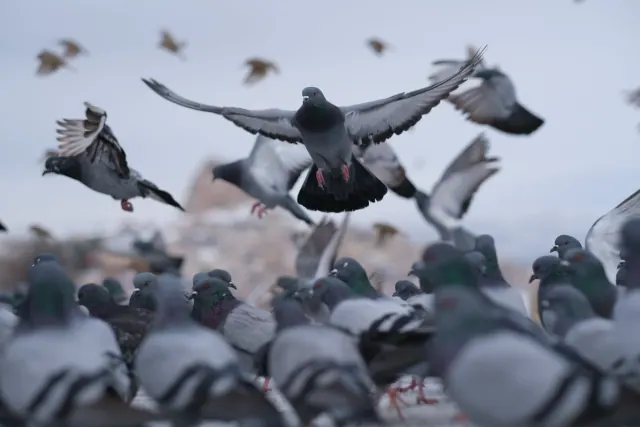
The fictional story says the U.S. government killed the country's birds and replaced them with machines that watch people. In that story, even a pigeon sitting on a wire becomes suspicious. There is no evidence for this bird-replacement plot.
McIndoe has joked that birds use power lines to recharge their batteries. It's a deliberately silly explanation of an everyday sight, presented in the confident tone of someone revealing a secret. The comedy depends on that gap between the ordinary bird and the elaborate accusation.
An Internet Joke With Real Rallies
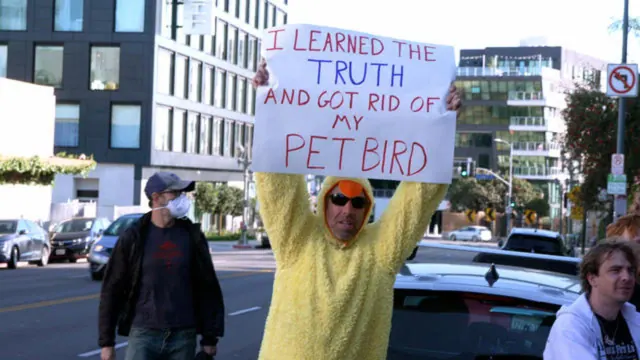
The placards and crowds in these photographs are real. Their demand that people stop trusting birds is the performance. The organizers built an actual gathering around a fictional cause.
The campaign borrows the look of earnest activism: posters, chants, a spokesman and an enemy hiding in plain sight. A photograph of a protest doesn't tell you if its message is sincere. Here, the surrounding interviews and reporting supply the context that a single sign can't.
Fighting Lunacy With Lunacy
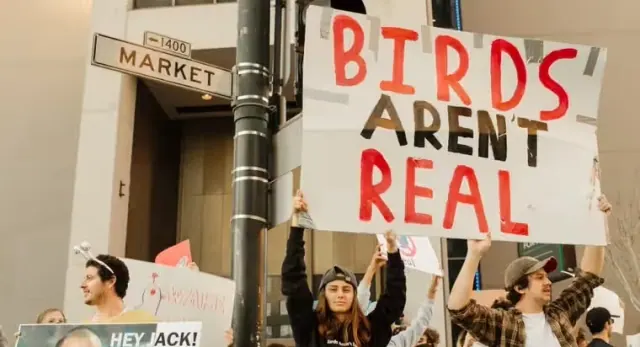
In a 2021 report by Taylor Lorenz, organizer Claire Chronis described the project as "fighting lunacy with lunacy." That captures why the group could look like a conspiracy movement while making fun of one.
The same report described a protest outside Twitter's San Francisco headquarters over its bird logo. This was before the platform became X. Reading those old images as a current demand would miss the timing. The bird logo gave the campaign a particularly convenient target for its joke.
Who Started the Movement?
For years, Peter McIndoe played the person most convinced that birds were drones. He'd created Birds Aren't Real in 2017, then kept the character going through interviews and public appearances.
When he spoke out of character in a 2023 TED interview, he described his own Arkansas upbringing. He'd been homeschooled in a conservative community and had used comedy to make sense of it. The angry bird truther was a role he could draw from that experience, rather than a discovery he'd made about wildlife.
A Sign in Memphis

The origin story goes back to Memphis in January 2017. McIndoe was visiting friends when he encountered a women's march and counterprotesters. He wrote Birds Aren't Real on a poster and began improvising a conspiracy around it.
Someone filmed him, and the video spread on Facebook. In Lorenz's reporting, he described the sign as a spontaneous joke. The explanation came afterward. A phrase short enough to read in passing had given him a character and a premise he could keep developing.
Building a Fictional History
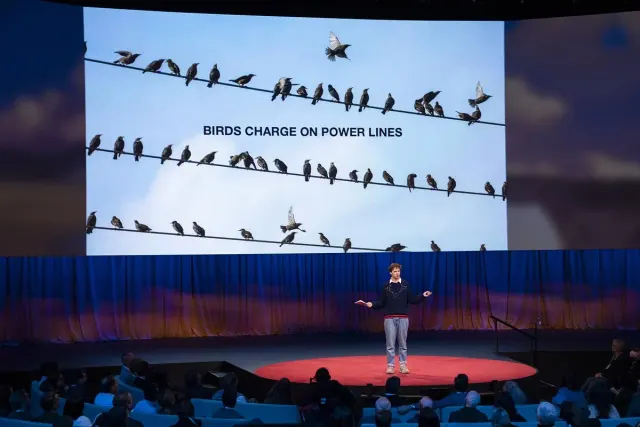
McIndoe and his friend Connor Gaydos expanded the joke with invented documents and a false history. A made-up claim could arrive looking as if somebody had already researched it. The extra material gave supporters more to repeat than the original three-word slogan.
The TED photograph here shows another way the idea traveled. A screen of birds on wires sits behind McIndoe onstage. The same ordinary sight used in the battery-charging joke becomes part of a presentation about how a conspiracy story takes shape.
Does Anyone Take It Literally?
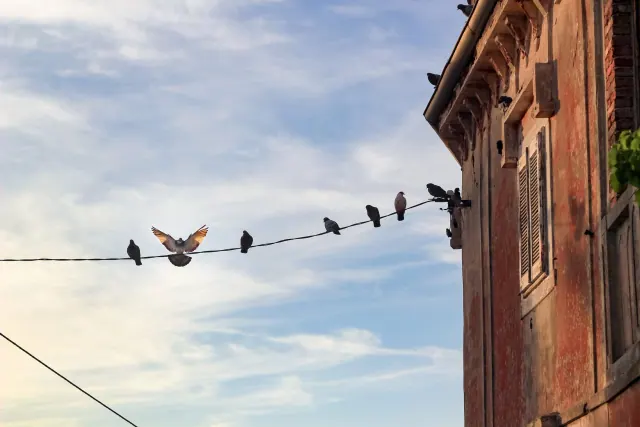
The campaign is satire, but that doesn't tell us how every person encounters it. A clip can lose its explanation when it's reposted. Someone seeing only a serious-sounding spokesman might not see the joke straight away.
McIndoe said in the TED interview that he had met one person at a rally who actually believed the claim. He also described putting clues into the performances so the audience could recognize the comedy. That is more careful than assuming nobody could ever misunderstand it.
Why It Became a Gen Z Story
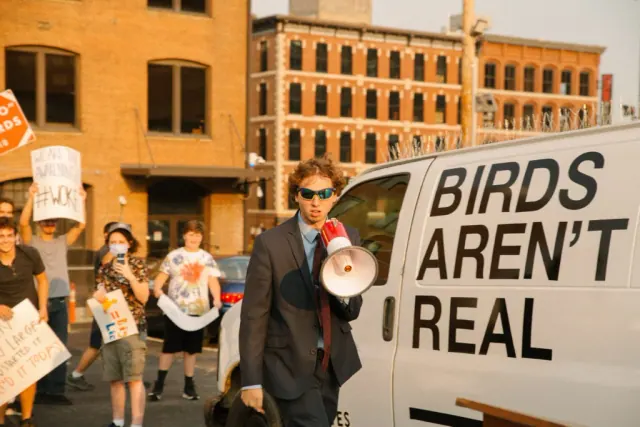
Early coverage described young people making a shared joke out of a world full of misinformation. That helps explain the Gen Z label attached to Birds Aren't Real. It doesn't mean a generation believes that pigeons are machines.
Look at the signs in the campaign photos: the slogan is easy to repeat, and people can add their own variations. Taking part can mean joining a piece of comedy. A crowd holding those signs isn't a survey of what young people think about birds.
What the Media Literacy Survey Found
A 2022 survey discussed by Media Literacy Now offers a separate look at education. Of 541 U.S. respondents, 42% reported being taught in high school to analyze science news for bias and credibility. Another question found 38% recalled classroom reflection on media messages.
These answers describe what respondents remembered learning. They don't measure how many Americans believe Birds Aren't Real. They also don't support the claim that nobody is promoting media literacy. The organization publishing the findings is itself working on that issue.
What McIndoe Learned From the Role
Playing the bird truther also changed how McIndoe thought about people with genuine conspiracy beliefs. In his TED conversation, he described becoming more interested in belonging and less interested in winning an argument. He spoke about listening to what a person needed from a community.
That's a reflection from the performer, not proof that the campaign changed its audience's minds. The absurd signs may start a conversation. Finding out what somebody actually believes still takes more than reading the words on a poster.
The Van Carries the Performance
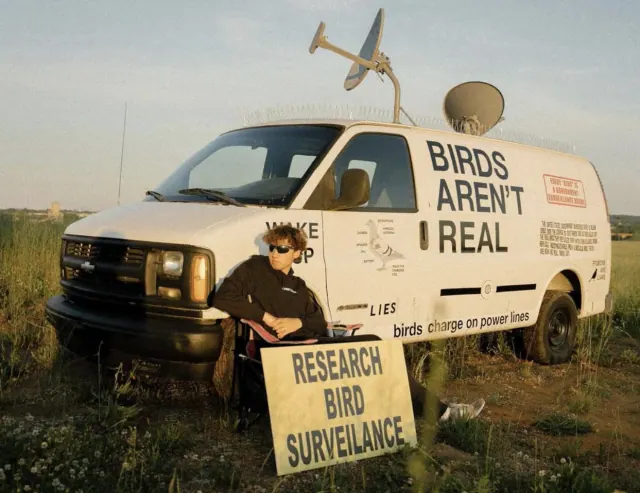
In the final photograph, McIndoe stands beside a van covered with the campaign's claims. A bird shape sits on the roof. The props carry the same idea as a sign or a slogan, giving the fictional investigation something you can walk past and photograph.
If one of those pictures appears in your feed, look for the interview or report around it before treating the words as news. In this case, the people running the supposed investigation have explained the act. The birds remain birds.