
A hotel roof, an inflatable landing bag and a Wonder Woman costume: Kitty O'Neil's work could make a television superhero look as if she could really fly. Away from a film set, she drove a rocket car across Oregon's Alvord Desert at a record-setting speed.
O'Neil was a stunt performer, racer and former competitive diver who was deaf from childhood. Her career connected those skills in ways a single nickname can't quite capture. A well-known television fall and a desert speed run were two very different jobs, and she made a name for herself doing both.
Who Was Kitty O'Neil?
A viewer watching Lynda Carter or Lindsay Wagner in an action scene might have been watching O'Neil's work as a double. Racing and high falls were specialties of the performer born in Corpus Christi, Texas, on March 24, 1946.
Her fastest woman in the world nickname points to a 1976 achievement. The record stood for decades, but it has since been surpassed. Calling her that today recalls her place in racing history, rather than identifying today's record holder.
Her Mother Helped Her Learn to Communicate
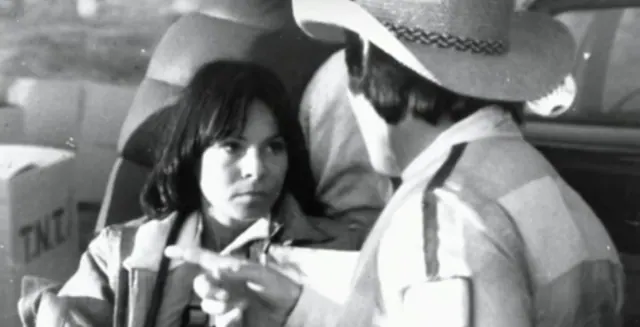
O'Neil's mother spent years teaching her to read lips and speak after she lost her hearing. The PBS documentary includes O'Neil describing those early lessons, rather than leaving her childhood entirely to other people's recollections.
Learning to speak involved working through individual sounds and words with her mother. The film later follows her into school, music and sport. That early communication work belongs alongside the better-known racing years in an account of her life; it didn't happen overnight.
Deafness Was Part of Her Life
O'Neil lost her hearing after illnesses when she was a baby. Accounts differ about the exact combination, so a list of diseases shouldn't be treated as a settled diagnosis here. She later spoke and read lips, skills she had learned over time.
Her deafness didn't keep her out of racing or stunt work. That doesn't mean it automatically made dangerous jobs easier, or that every deaf person has the same experience. The interesting evidence is in the work she actually completed, not a medical explanation inferred from her success.
From School to the Diving Pool
The PBS documentary describes O'Neil playing the cello and joining school swimming and diving teams. Competitive sport became a serious pursuit. In 1962, her family moved to California so she could train in platform diving with Sammy Lee, an Olympic gold medalist.
Those years came before the rocket cars and Hollywood falls. Diving gave her experience working in the air before entering the water; later, her longtime friend and vehicle builder Ky Michaelson would discuss that background when describing her skill at high falls.
An Olympic Ambition Cut Short
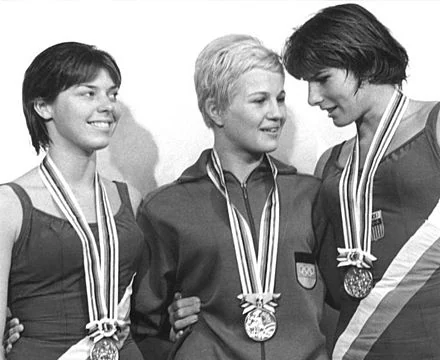
O'Neil trained with the hope of competing at the 1964 Olympics. Before the trials, a broken wrist and spinal meningitis ended that path. She wasn't a member of the Olympic team, and shouldn't be described as an Olympic medalist.
She looked for a different kind of competition after diving. The PBS timeline places water skiing, motorcycle racing and automobile racing in her next sporting chapter. Her career changed direction; it didn't begin with a movie producer discovering a stunt performer.
Speed Became Another Specialty
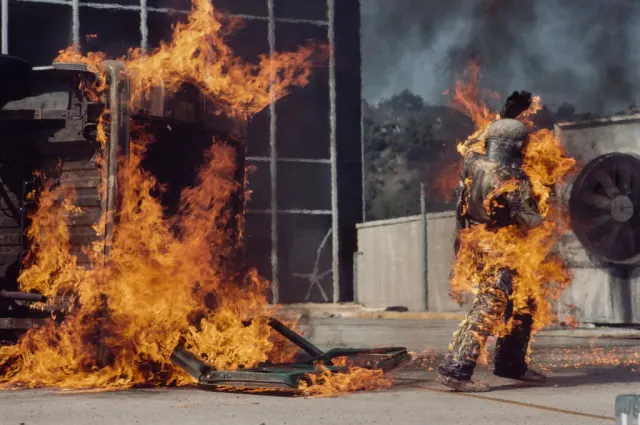
In 1970, O'Neil set a women's water-ski speed record of 104.85 mph. She also competed off-road on motorcycles and in automobiles, including the Baja 500 and Mint 400. The move from diving to racing brought a new set of machines and demands.
Her path into stunt work included training with Hal Needham, Duffy Hambleton and Dar Robinson. Hambleton appears in accounts of her personal and professional life, but descriptions of their relationship differ. He can be identified as a colleague in her stunt training without resolving that disagreement by calling him her husband.
Joining Stunts Unlimited
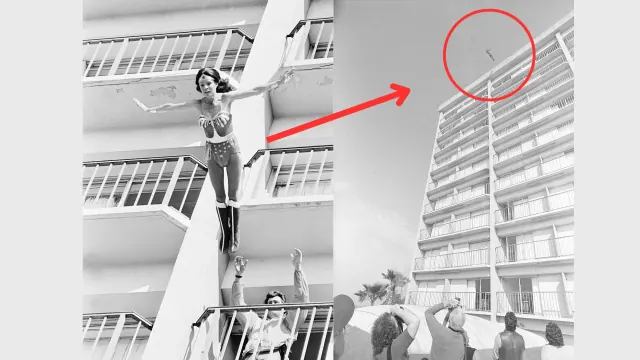
Stunts Unlimited identifies O'Neil as its first female member and records her membership from 1976 to 1980. Her screen work included doubling for Lynda Carter on Wonder Woman and Lindsay Wagner on The Bionic Woman. These were jobs involving a team, equipment and preparation, not spontaneous dares.
For a 1979 Wonder Woman episode, she made a 127-foot fall from the Valley Hilton in Sherman Oaks into an airbag. The archive image shows the scale of the building. The character's apparent flight depended on a real performer completing the fall.
The 1976 Land-Speed Record
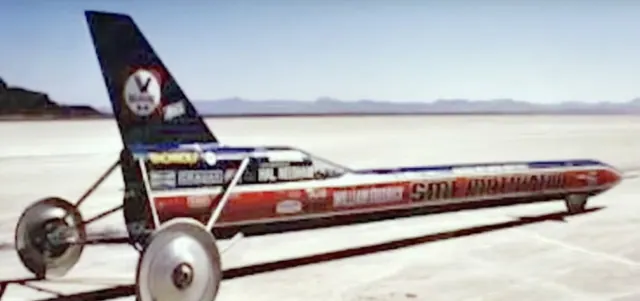
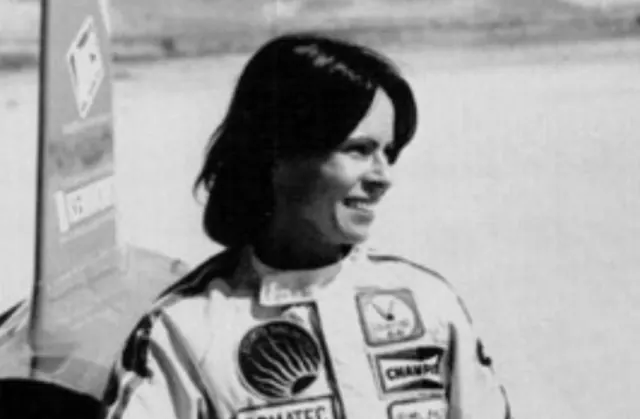
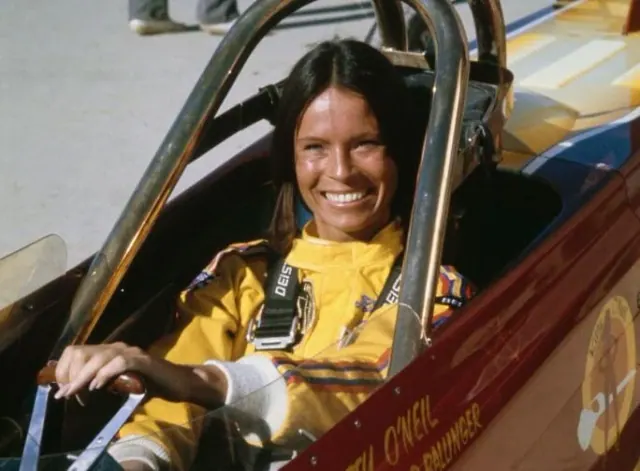
On December 6, 1976, O'Neil drove the three-wheeled SMI Motivator in Oregon's Alvord Desert. Her record average was 512.710 mph. Reports of a peak above 618 mph describe a different measurement; that figure shouldn't replace the average when explaining the record.
The mark stood until Jessi Combs' run in the same desert on August 27, 2019. Guinness records Combs' achievement at 522.783 mph. Combs died during the attempt. O'Neil's place in this history is a record that lasted more than four decades, rather than an unchanged present-day title.
Her Life Became a Television Movie
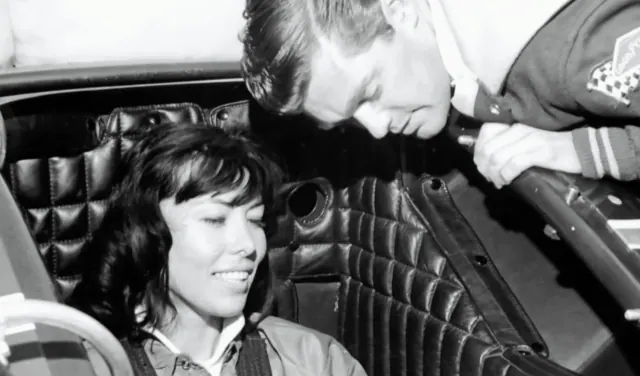
Stockard Channing played O'Neil in Silent Victory: The Kitty O'Neil Story, released in 1979. A dramatized biography brought her name to viewers who might otherwise have known only the characters she doubled. It remains a film adaptation, not a substitute for the record of her career.
Mattel had also released an O'Neil doll in 1978. The miniature version placed the stunt performer herself at the center of the action, instead of the television character she helped bring to life. Stunts Unlimited's tribute includes a photograph of the doll alongside images of her work.
Stepping Away From Stunts
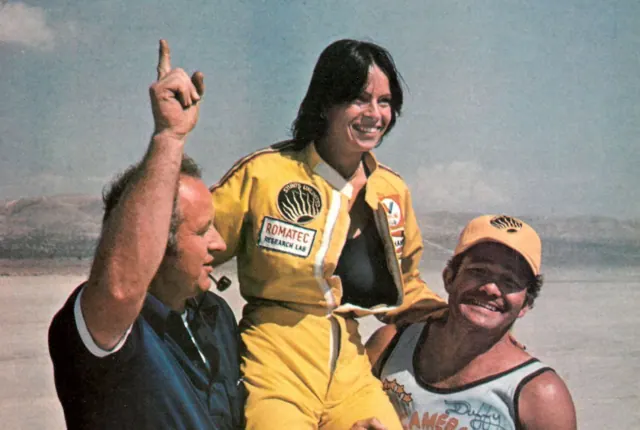
Stunts Unlimited dates O'Neil's retirement to 1982 and credits her with 22 speed records on land and water. That tally covers a career, not 22 versions of the same land-speed title. Her professional years included racing, high falls and film work with different kinds of recognition.
Some memorabilia from her career is kept at the Eureka Pioneer Museum in South Dakota. Photographs and equipment offer a way to look beyond the famous nickname, back to the individual vehicles, productions and performances behind it.
Remembering Kitty O'Neil
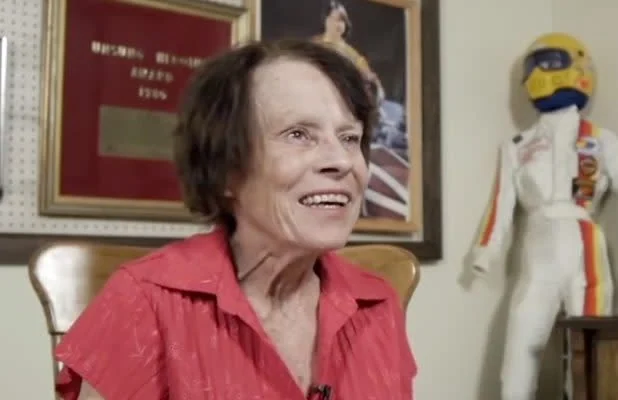
O'Neil died on November 2, 2018, aged 72. Her former stunt organization published a memorial, and the following year's Oscars included her in its In Memoriam tribute. PBS later made her the subject of a documentary featuring archival footage and people who knew her.
Her achievements are recorded in places as different as a stunt organization's member history and a television documentary: the long-standing speed mark, the television work and a career whose most demanding moments often happened outside the star's close-up.