
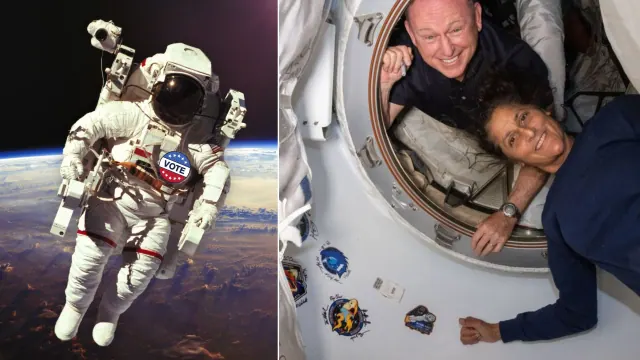
When Butch Wilmore and Suni Williams remained aboard the International Space Station longer than planned in 2024, an ordinary Earth appointment became a question from orbit: how would they vote in the presidential election?
NASA already had a process for that. Astronauts could coordinate absentee voting with the county clerk where they lived, using arrangements designed to transmit ballots securely. Being away from Earth didn't mean being outside the election system.
The mission lasted longer than expected
Wilmore and Williams launched on Boeing's Starliner crewed flight test on June 5, 2024. Technical problems led NASA to bring Starliner back without its crew and extend the astronauts' station stay beyond the short test mission initially planned.
They eventually returned to Earth aboard a SpaceX Dragon on March 18, 2025. That later outcome matters when revisiting an older story predicting a February return. An expected date wasn't the same thing as the date the mission ended.
The ballot still came from the home county
Voting from orbit required arrangements with election officials at home. NASA describes the process as absentee voting, with Mission Control helping relay electronic election material.
The county still administered the ballot. Mission Control did not choose a candidate or take over the election officials’ role. Its part was helping the material travel between the astronaut and Earth.
Advance coordination and security checks were necessary. A test transmission could confirm that the system worked before the actual ballot was used. Like other voters who would be away from home, astronauts needed the arrangements in place so officials could receive and handle the vote through the appropriate procedures.
There was a precedent before Starliner
Texas enabled voting from space in 1997, and astronaut David Wolf became the first American to cast a ballot from orbit that year. Long missions made it practical to plan for an election occurring during a stay away from Earth.
Later crews used those arrangements too. NASA's explanation of the system includes astronauts other than Wilmore and Williams, so not every example in a general account describes their particular ballots.
A practical connection to life below
A space mission can involve unusual transport and communication, but the voting question was familiar: how does someone participate while away from home? The answer required cooperation between the crew, NASA and election officials.
This is an account of that 2024 situation. It isn't a claim that the astronauts remain in orbit, or an instruction to use their process for an ordinary absentee vote today.