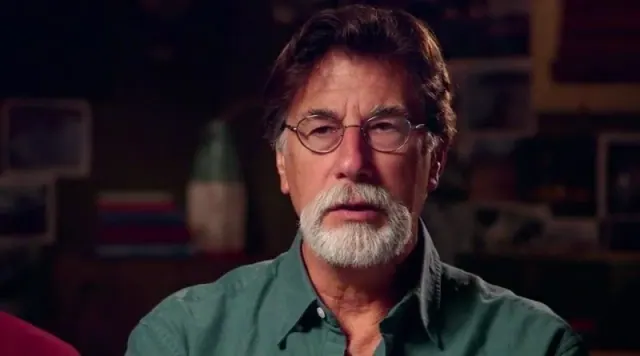
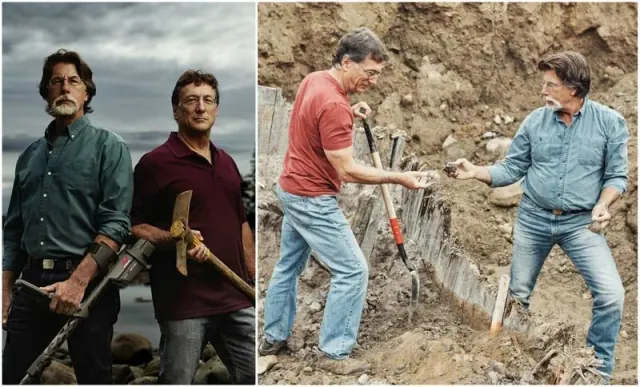
There's a television premiere on the calendar, but no confirmed treasure reveal to go with it. HISTORY has set November 10, 2026, for season 14 of The Curse of Oak Island. Rick and Marty Lagina are heading back into a mystery that was already old long before cameras arrived.
If you've lost track of the shafts, stones and competing explanations, start with the brothers themselves. Their search brings together a childhood fascination, engineering work and a willingness to investigate another possibility after the last one stalls. The finds are part of that story. So are the gaps between what an object shows and what someone hopes it means.
The brothers behind the search
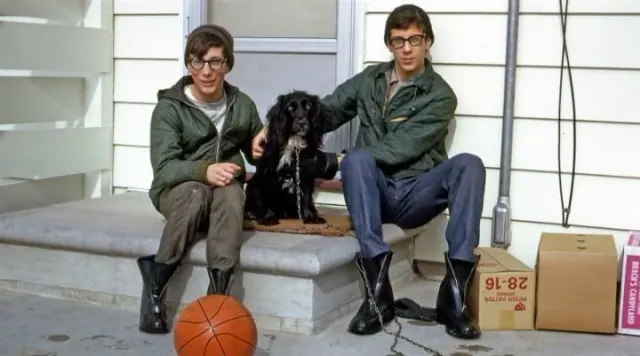
Rick's interest has a traceable starting point. HISTORY's biography says he read about Oak Island in the January 1965 issue of Reader's Digest when he was 11. The retired postal worker from northern Michigan kept that fascination into adulthood.
His younger brother Marty brought an engineering background to their shared project. The network's own profile describes Marty as skeptical that treasure was ever buried there. That difference gives the partnership some room to breathe: Rick's long attachment to the mystery sits beside Marty's demand for evidence. They don't have to approach every clue in exactly the same way.
Where the Money Pit story begins
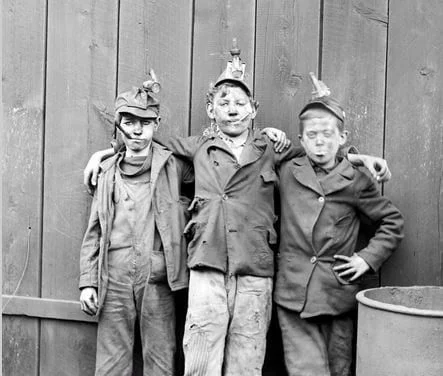
The familiar account starts in 1795 with Daniel McGinnis, John Smith and Anthony Vaughn investigating a depression in the ground. A later treasure-company prospectus retold that discovery as the beginning of something much bigger.
It's a memorable opening: a suspicious patch of earth, a nearby tree and the possibility that someone left valuables underneath. But the written account came decades after the supposed event, and the company was seeking investors. Read it as a record of the legend and its promoters, rather than a contemporary excavation diary. The old photograph here isn't a picture of the three men making their discovery.
Water was a problem long before television
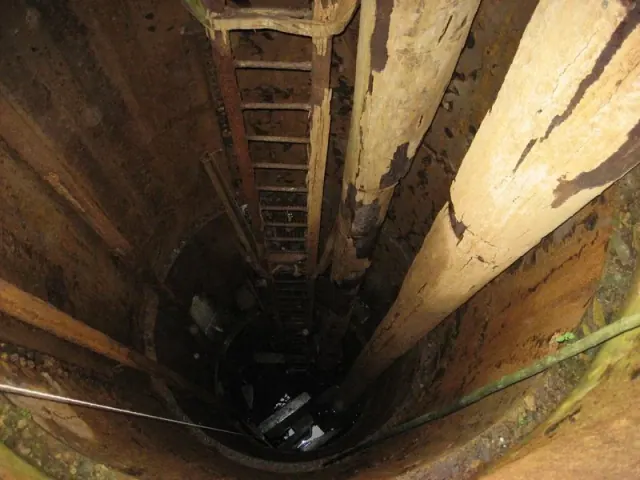
The Money Pit story soon becomes a story about trying to keep an excavation open. Historical accounts describe repeated digging, flooding and renewed attempts by different groups. These are older phases of the hunt, not discoveries made by the Laginas in the early 2000s.
A 1971 engineering report recorded a site already altered by numerous shafts and tunnels. Its authors also warned that their summary of earlier searches wasn't a guarantee that those historical accounts were accurate. That leaves today's investigators with two problems at once: dealing with the ground and working out whose earlier digging they may have reached.
One inscription, competing readings
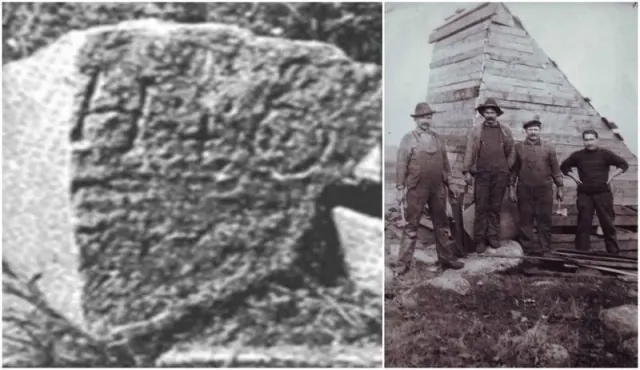
A promise of money buried farther down is the sort of message a treasure hunter would love to find. The alleged inscription on Oak Island's stone has been given that reading, but it hasn't put an end to the argument.
In its account of the theories, HISTORY describes a guest proposing a second, Spanish message alongside the familiar English one. The story gets another possible route to follow. A viewer still has to ask about the object those interpretations depend on: where it is, how the markings were recorded and how anyone could test the reading against it.
Why the theories spread so widely

Pirates would be enough for many treasure stories. Oak Island has also attracted accounts involving Marie Antoinette, Shakespeare and the Knights Templar. Each possibility brings its own characters and a different reason to keep looking.
HISTORY itself groups these explanations as theories. That's the useful way to approach them. A familiar historical name can make a clue feel more consequential before its connection has been established. The portrait of Marie Antoinette illustrates one such idea, not evidence that her possessions reached the island. You can follow the argument without accepting its destination.
Still digging after thirteen seasons
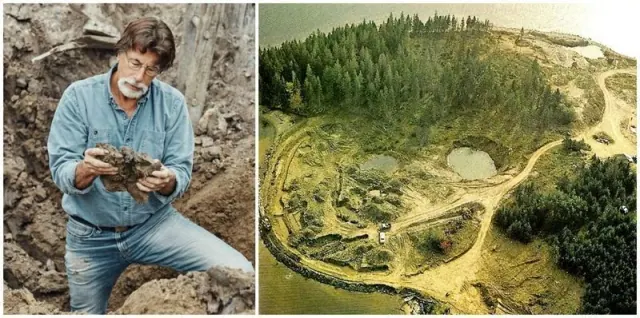
Season 13 began in November 2025 and ran into May 2026, according to HISTORY's episode guide. Its successor was already being advertised before the end of the year. That is a long way from a one-off documentary about a solved mystery.
The brothers' search works as a continuing series because there's usually another place to investigate. An episode can leave a promising lead unfinished. When you return to an old clip or headline, check where it fits in that sequence: an exciting possibility from several seasons ago may still be an open question.
The search had investors before it had cameras
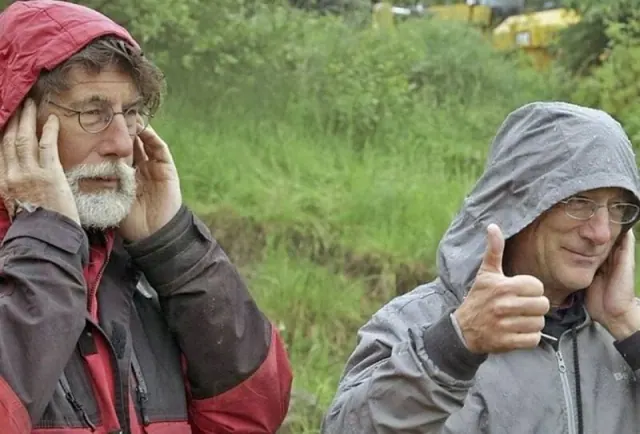
Money was part of the Oak Island story long before the Laginas' television years. An 1893 Oak Island Treasure Company prospectus offered shares for $5 each and laid out its case for recovering the supposed riches.
It is a useful document to read with its purpose in mind. The organizers were seeking backing for a search, not presenting a completed recovery. Their confidence belongs to that fundraising story. The modern operation has its own participants and arrangements, and the old prospectus tells us nothing about the brothers' personal fortunes or the terms of today's investments.
The sword that needed a history of its own
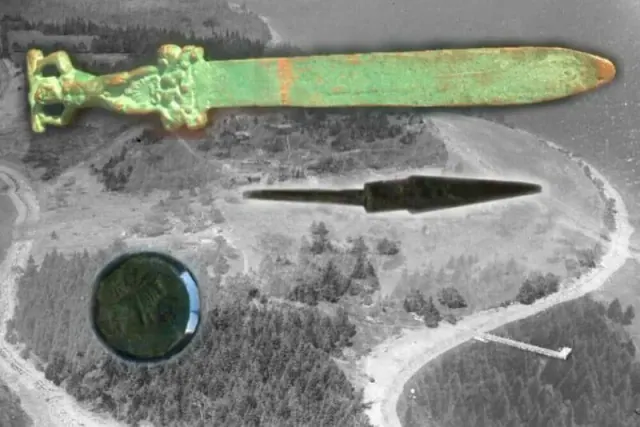
The third season introduced a sword into the investigation. HISTORY's listing for the January 12, 2016, episode says the team obtained the object. That's a narrower statement than saying the brothers excavated an authenticated Roman weapon.
An old-looking sword raises questions about manufacture, ownership and how it arrived at its reported location. Its shape alone can't answer them. Even an ancient object can move long after it was made. The possibility of a Roman connection made an arresting television story; it didn't, by itself, establish a Roman expedition to Oak Island.
Zena Halpern and a map to follow
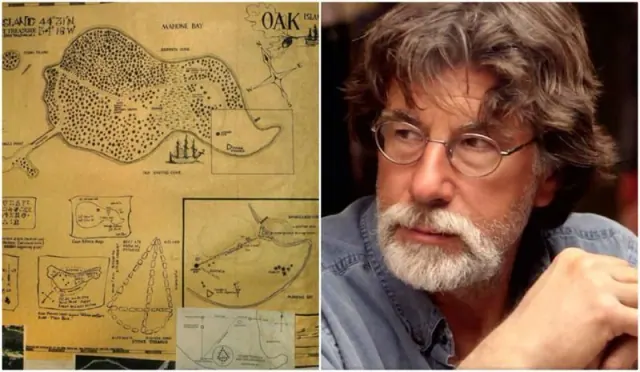
Author Zena Halpern brought a different sort of clue: a map tied to her ideas about the Knights Templar. Marked locations offered places to investigate and another possible explanation for the island's past.
A map can make an argument look wonderfully concrete. It still needs a history of its own. Who made it, when, and from what information? The age written on a copy doesn't answer all of that. Halpern's interpretation became part of the investigation, but the map shouldn't be presented as an authenticated medieval travel record or proof that Templars buried a treasure.
A fragment isn't the missing book
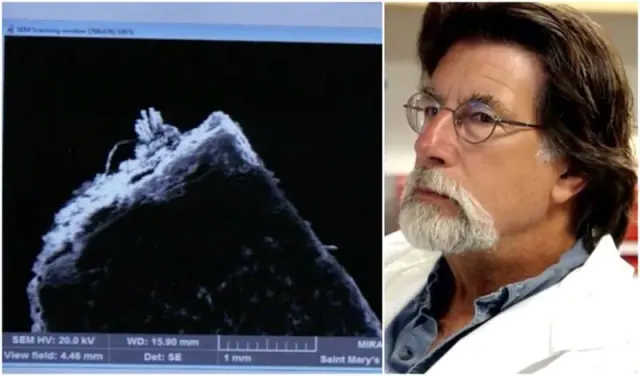
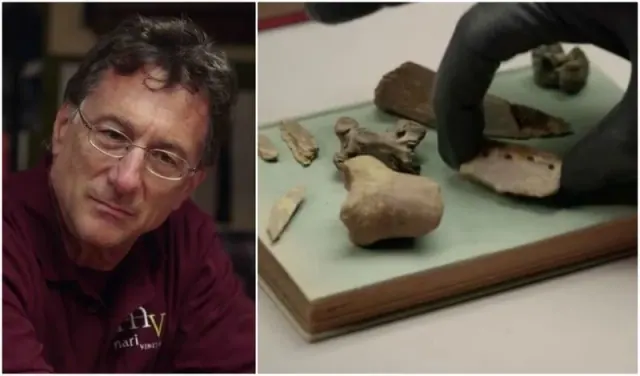
The hunt doesn't always point toward coins or jewelry. Material described as bookbinding led to a much quieter possibility: there might once have been a document down there. A scrap is enough to start that conversation, though it can't tell the whole story of a book.
The photograph enlarges the fragment in a composite with a reaction shot. It offers no readable manuscript. Before attaching a famous writer or a secret message to such a find, the material needs to be identified and its circumstances understood. Until then, the missing document remains an idea to investigate.
The older paperwork behind the parchment claims
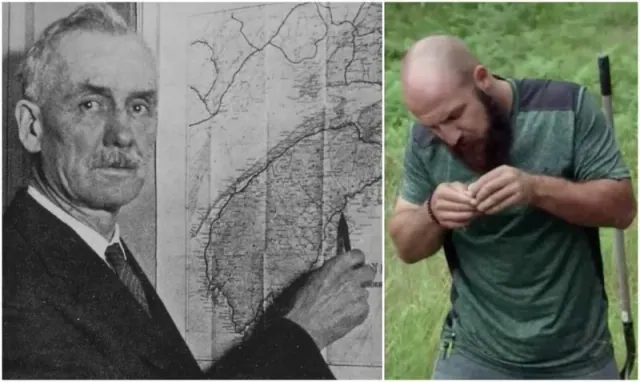
The paperwork has a history, too. A collection of early Oak Island documents includes an 1897 affidavit concerning material identified as parchment and a later affidavit by Frederick Blair. These records let a reader follow what searchers reported and how those reports were preserved.
They don't make every later claim about a fragment true. An old account, a newly recovered scrap and an illustrated television theory can become muddled in a retelling. Keep their dates and identities separate. Otherwise, one uncertain identification starts to look like several discoveries confirming one another.
Franklin Roosevelt joined an earlier chapter
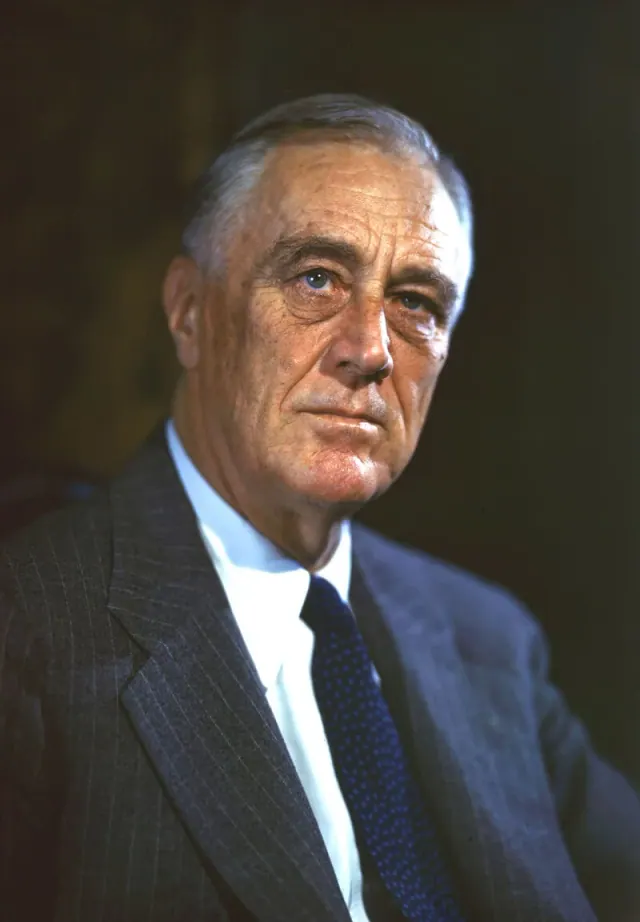
Franklin D. Roosevelt became associated with Henry Bowdoin's 1909 Oak Island venture long before his presidency. M. R. Chappell's later manuscript describes that connection. The research catalogue also lists an October 17, 1909, letter from Duncan Harris to Roosevelt about the work.
These are different kinds of records: a later narrative and an entry identifying contemporary correspondence. They place Roosevelt in an earlier chapter of the hunt without making his name proof of a treasure. The portrait here is a reminder of how far the cast of interested people extends beyond the television years.
The people around the brothers
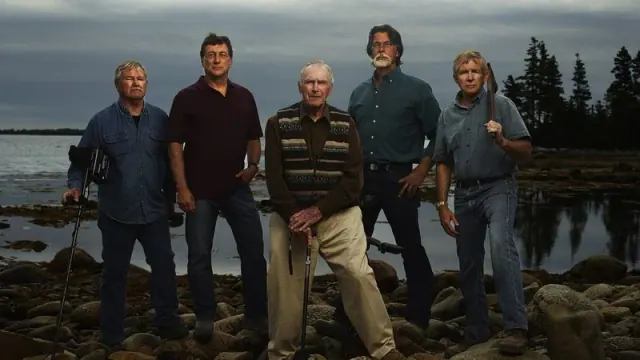
The names around Rick and Marty matter because the work is shared. Craig Tester brings drilling and engineering experience. Gary Drayton works with metal detectors. Dan Blankenship supplied years of knowledge from an earlier phase of the hunt.
The old group photograph captures that broader cast, rather than a story of two men working alone. It shouldn't be read as a current team roster. Across different years, the search has depended on people doing very different jobs, from examining a small object to deciding where heavy equipment should go next.
Dan Blankenship’s part in the story
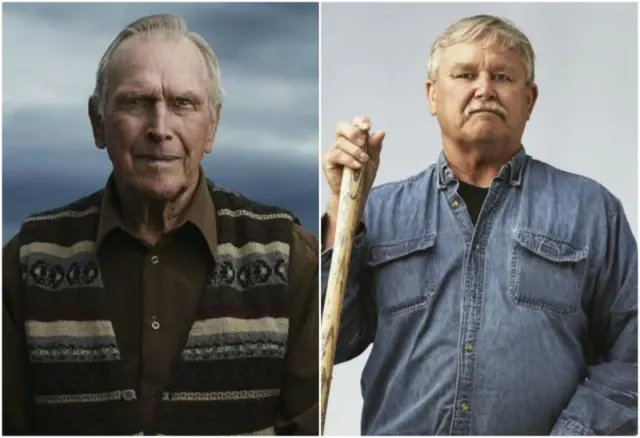
Dan Blankenship died in March 2019. HISTORY's biography credits him with more than fifty years of searching on Oak Island, after a magazine account helped draw him away from his life in Florida.
His son David also became part of the story. The archival photographs belong to that family chapter, rather than an update on anyone's health or present involvement. Dan's years of work helped connect the modern investigation with earlier searches. Remembering that contribution doesn't require claiming that he, or the team that followed, had finally solved the mystery.
Craig Tester brings a working partnership
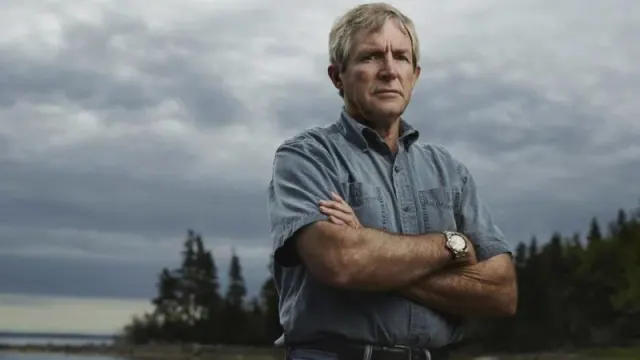
Craig Tester and Marty Lagina were college roommates before becoming business partners. HISTORY's profile describes Tester's engineering background and his experience with drilling and resistivity surveys, skills that also have a place on Oak Island.
There is plenty of practical work between deciding that something might be underground and getting a look at it. Someone has to plan the next investigation and make sense of what the equipment finds. That is Tester's part of the story. It gives the brothers a collaborator whose usefulness doesn't depend on having another elaborate treasure theory.
The same magazine story, two different paths
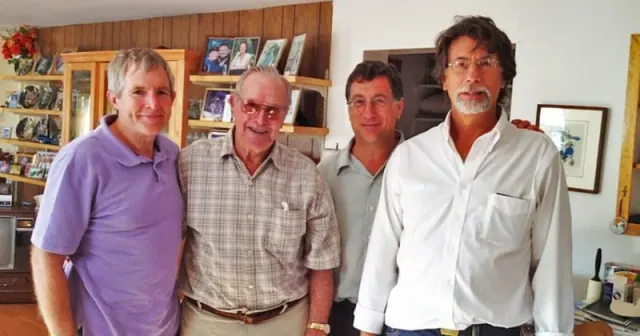
Rick Lagina and Dan Blankenship had a magazine story in common. HISTORY's biographies say the January 1965 Reader's Digest account caught Rick's attention as a boy and also helped draw Dan from Florida into the search.
By the time their paths met in the modern project, Dan had years of work on the island behind him. Rick brought an interest he had carried since childhood. The network places the modern team's takeover of the hunt in 2006. That background helps explain a partnership between people who reached the same place from quite different stages of life.
Testing what the water might contain
By 2021, the search had reached a university laboratory. Queen's University described work led by Peir Pufahl analyzing borehole water for elements, including gold. Water could carry traces leached from material underground.
The university's account kept an important possibility open: the gold signal could come from treasure or from naturally occurring gold. Those explanations lead to very different stories. A measurement can help decide where to look without telling you that a chest is waiting there. The laboratory work is useful precisely because it asks a question the next investigation can try to narrow.
Timbers can belong to the searchers
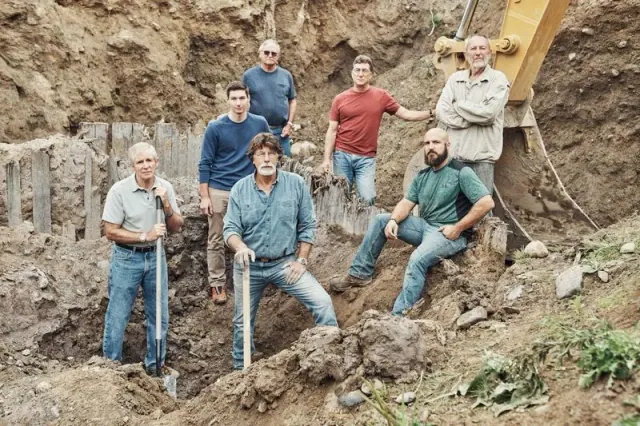
Wood underground is a useful clue, but an island with so much excavation has more than one reason to contain it. A timber might relate to earlier searchers' work rather than the people imagined to have hidden treasure.
That makes a shaft's location and construction worth examining alongside any date assigned to a wood sample. The date of a tree's growth and the date someone used its timber are different questions. An old photograph of a digging crew helps explain the complication: the hunt itself has left a substantial physical history to sort through.
The bone claims need their own evidence
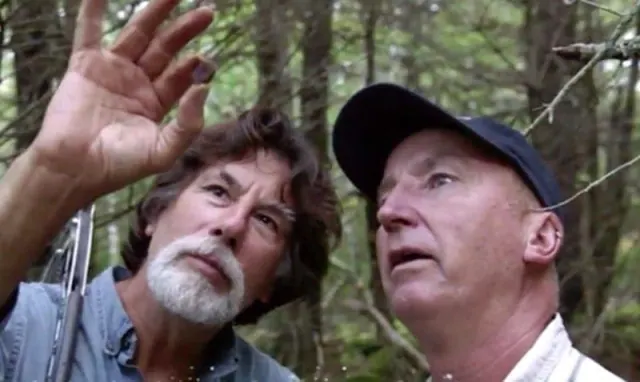
The network's account describes human bone samples from the Money Pit and reports ancestry findings. Those are claims about particular samples, not a ready-made explanation of how people reached the island.
To judge them properly, you'd want the laboratory results and the recovery context. A broad ancestry label wouldn't identify an individual, a route across the Atlantic or membership of the Knights Templar. Those steps can't be supplied by the treasure theory. The historical question remains open even if a sample has been successfully identified as human bone.
Gary Drayton’s smaller-scale search
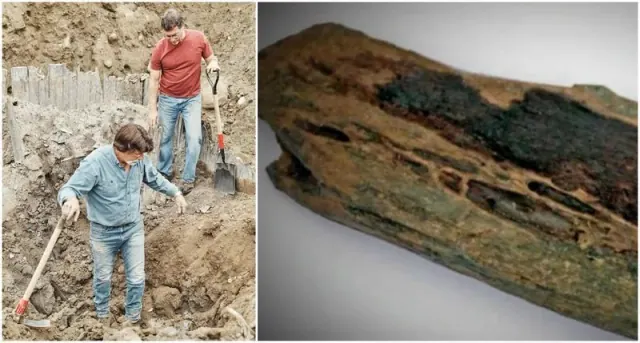
Not every search on Oak Island begins with a drill rig. Gary Drayton's metal-detecting work has brought smaller objects into the picture, including coins and pieces of jewelry. HISTORY credits the English detectorist with a number of the team's memorable finds.
That gives the investigation another pace. A signal can lead to an object you can hold and examine, rather than an anomaly far underground. The object still needs to be identified, but the work starts with something tangible. The television story often returns to that moment of discovery because it is easier to see than a buried possibility.
A lead cross with several possible stories
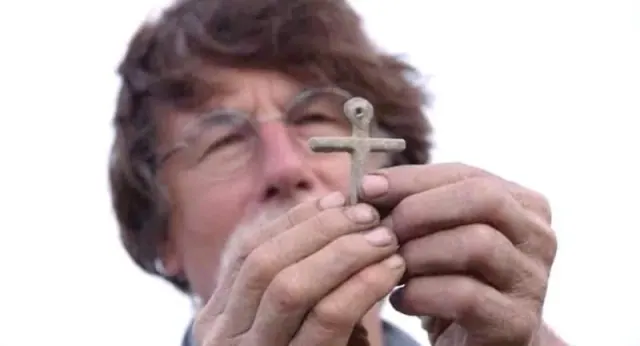
The lead cross became one of the series' recognizable objects. Its form encouraged comparisons with religious imagery and helped sustain the proposed Templar connection. A small object could suddenly seem to connect the island to a much larger history.
The cross and that interpretation are separate matters. A material analysis, a comparison of shapes and a claim about who carried it answer different questions. The photograph establishes the object's appearance in this account, not the identity of its owner. Any proposed medieval date or European origin needs to remain attached to the evidence offered for it.
Looking alike is the beginning of a question
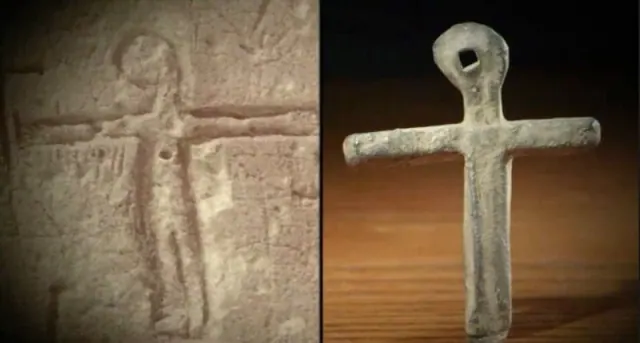
The cross also appears beside a carved symbol in the archival composite. Side by side, the resemblance becomes the subject of the picture. It is a comparison, not a record of two objects being recovered together.
Suggestions involving the goddess Tanit or secret Templar beliefs take the argument farther still. A similar outline doesn't establish a shared maker, date or religious practice. To carry that explanation, the evidence would need to connect the particular objects and the people involved. The visual match alone leaves a great deal of that story unwritten.
The appeal of hidden gold inside ordinary metal
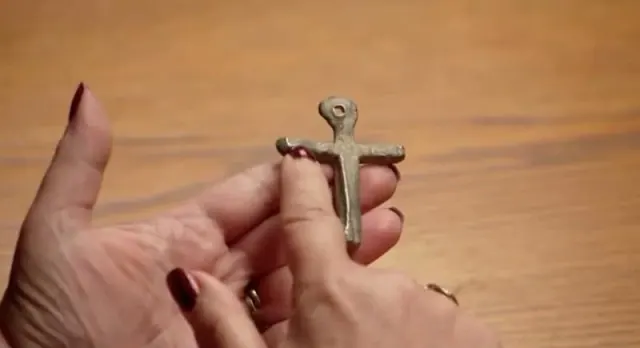
Another explanation imagines valuables concealed inside something less inviting. It is a neat smuggling story: an unremarkable outer material could hide a more precious object. That possibility has an obvious appeal in a treasure hunt.
But a possibility doesn't establish what is inside a particular cross. That would require examination of the object itself. The small cross held in the photograph isn't shown cut open to reveal gold. Without evidence of its contents, the smuggling explanation remains a proposed way to interpret a find, rather than a discovery of concealed wealth.
Looking more closely at the garnet
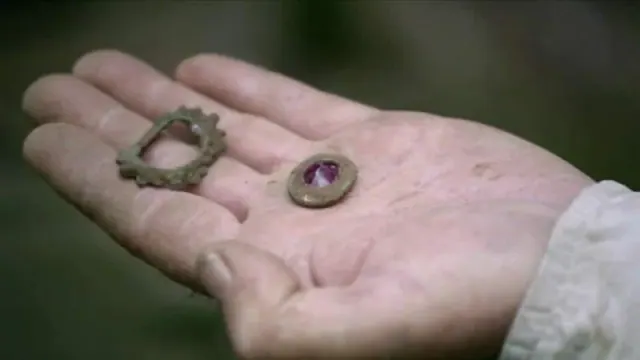
A colored stone and a metal setting lie on a hand in this photograph. They're small enough to take into a laboratory, where an examiner could investigate the material rather than infer its identity from a television close-up.
Rhodolite belongs to the garnet group. That name describes a material; it doesn't supply the jewelry's age. An examination of the setting might contribute something different from an examination of the stone. Neither gives it a royal owner without a trail of supporting evidence. The Marie Antoinette association remains a proposed story about the find.
The same gemstone can come from different places
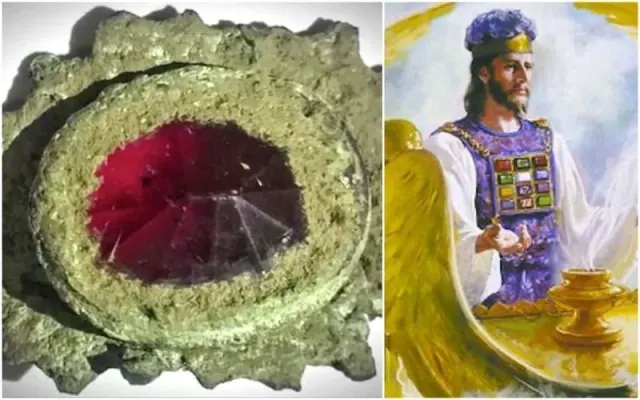
GIA's collection records include rhodolite specimens from Tanzania and Sri Lanka. Those are the institute's own catalogued stones, not identifications of the Oak Island find. They show why naming a gemstone isn't the same as tracing one particular piece of jewelry.
For the island's stone, a connection to a royal collection would need a separate chain of evidence. The archival illustration puts a red gem beside a figure in royal dress, but that pairing doesn't provide the chain. It leaves the owner, the route and the date of arrival to be established.
An ordinary tool can still be a useful find
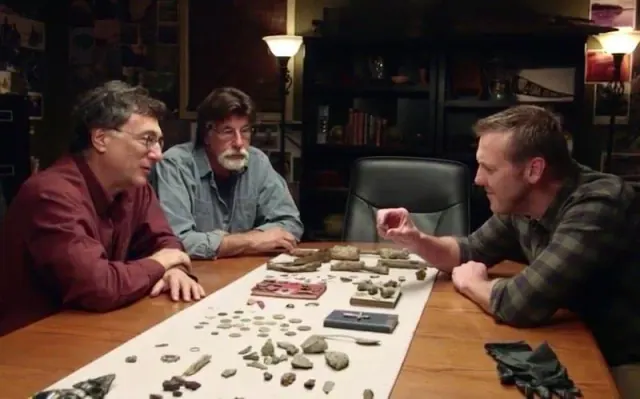
A useful comparison comes from two iron objects the network says Gary Drayton and Dan Henskee found in 2019. In its account, blacksmithing expert Carmen Legge suggested they were swages or tools used in sharpening rock drills.
That is an explanation tied to a possible job an object did. It can add something to the history of work on the island without producing a chest of jewels. The table of objects in this photograph illustrates the wider process of comparison; it isn't a verified picture of those two particular finds.
How far back does the work go?
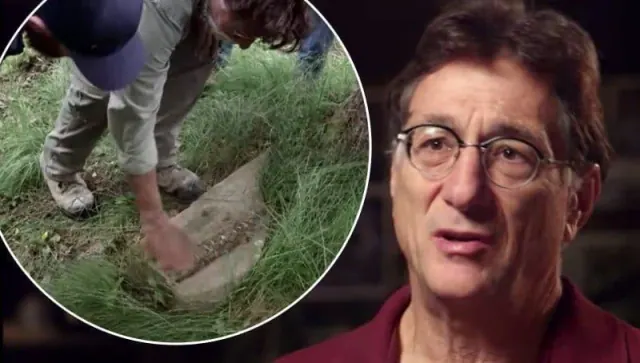
For Marty, one question has been how much work on the island took place before the reported 1795 discovery. His HISTORY biography makes that interest explicit, alongside his skepticism about buried treasure.
A marked object might contribute to the discussion, but it has to fit into a chronology. If you identify a numeral, you still need to work out when it was made and what it referred to. That is a more limited task than assigning the whole site to a particular civilization. It also gives the team something specific to investigate before the next theory takes over.
Norse history has a confirmed site elsewhere
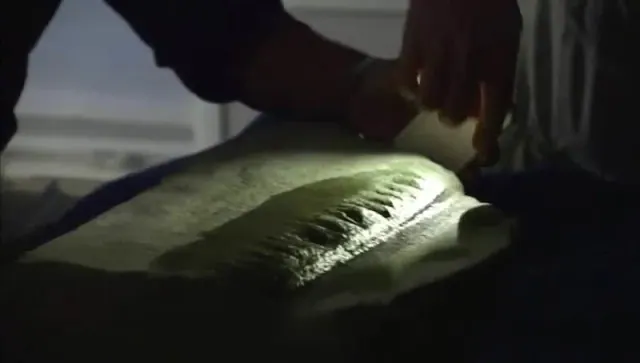
There is solid evidence of Norse activity in North America, but it doesn't come from an uncertain Oak Island object. Parks Canada describes the remains at L'Anse aux Meadows in Newfoundland, where Norse settlers built timber-and-sod structures about a thousand years ago.
That established site gives the comparison a useful limit. Knowing that Norse people reached Newfoundland doesn't identify a mark, a stone or an unfamiliar object from Nova Scotia. The Oak Island claim would need evidence from Oak Island. A photograph of an unidentified object can't borrow the certainty of a documented settlement somewhere else.
Laird Niven’s work goes beyond the small objects
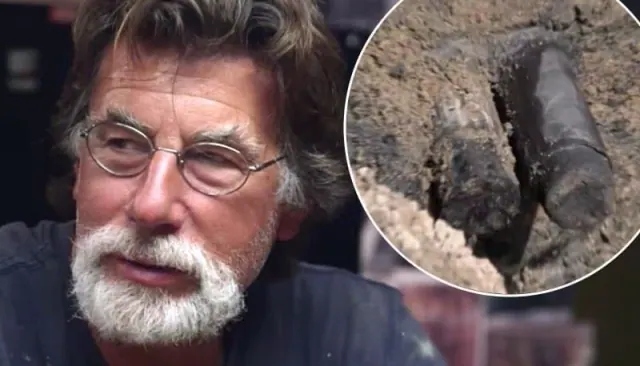
The network also describes archaeologist Laird Niven leading an investigation of a stone wall on the island in 2022. Its account considers the construction and materials, showing another side of a search often pictured through metal detectors and deep shafts.
A wall has to be understood where it stands. Nearby material and the relationship between features can matter as much as the shape of one loose find. The archaeological question is what happened at that location. The archival composite here doesn't identify a particular excavated wall or authenticate the old tube-plate claim.
The chamber the audience still has to imagine
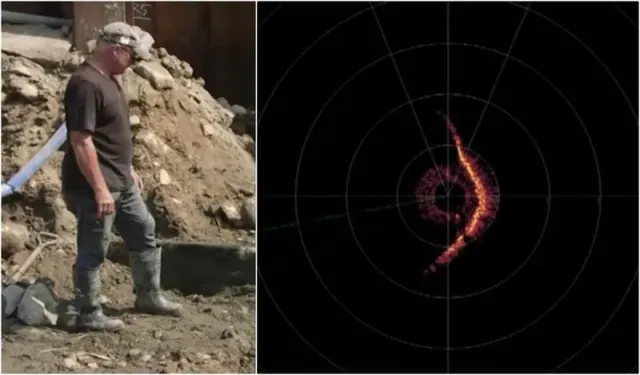
HISTORY's episode guide for January 26, 2016, described a large void deep in the Money Pit area. The episode was called Voices from Below, an apt title for a story built around something the audience couldn't simply walk into and inspect.
The idea of a Chappell Vault gives that underground space a possible identity. It doesn't give us its contents. A scan, a drilling observation and a chamber full of valuables are different kinds of evidence. The image here combines a participant with an instrument display, leaving the supposed vault itself out of view.
The ground has its own explanations
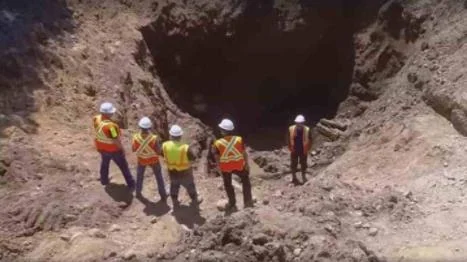
An older Nova Scotia geological memoir offered a very different starting point for the mystery. Its author agreed with an earlier interpretation that the depressions which encouraged the search were natural sinkholes.
That doesn't amount to a modern explanation of every shaft or feature on the island. It does show that a geological alternative belongs in the discussion alongside accounts of engineered traps. Water in an excavation is a problem to investigate before it becomes evidence of someone's plan. The historical dig shown here illustrates the work; it doesn't establish the cause of the flooding.
Where the next episode picks up
HISTORY's first listing for season 14 is Silver Lining Playbook. Its synopsis points toward the Money Pit and a large boulder feature on Lot 8 as Rick, Marty and Craig resume the search. Those are the advertised subjects of the coming episode, rather than discoveries independently examined here.
For a returning viewer, the locations give the next installment a starting point. One brings the story back to its familiar underground puzzle; the other turns attention to a feature elsewhere on the island. The November 10 premiere is where the television account picks up again.