
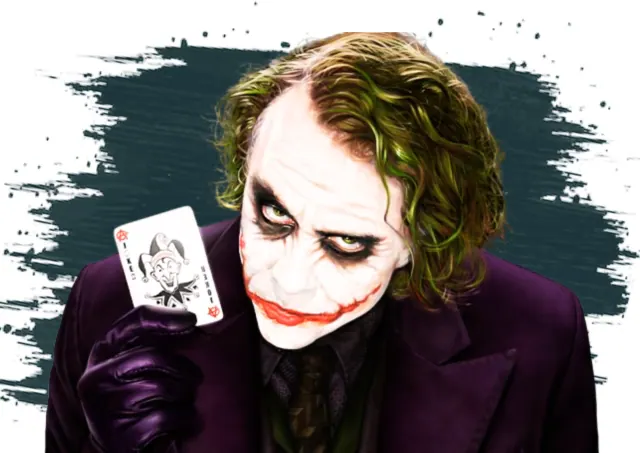
Spoilers follow for The Dark Knight, released in 2008.
The Joker has already made the mob uncomfortable before he names his price. Heath Ledger's character walks into their meeting, performs a violent trick with a pencil and offers to solve their Batman problem. When he asks for half of their money, several men laugh. The man credited as the Chechen doesn't.
That contrast is enough to invite a theory. A Reddit interpretation circulated by a user named u/foodfighter connected the character's reaction to real-world power politics. It's an interesting way to read a brief moment, provided the reading stays separate from confirmed background or an explanation supplied by Christopher Nolan.
Start With What the Scene Shows
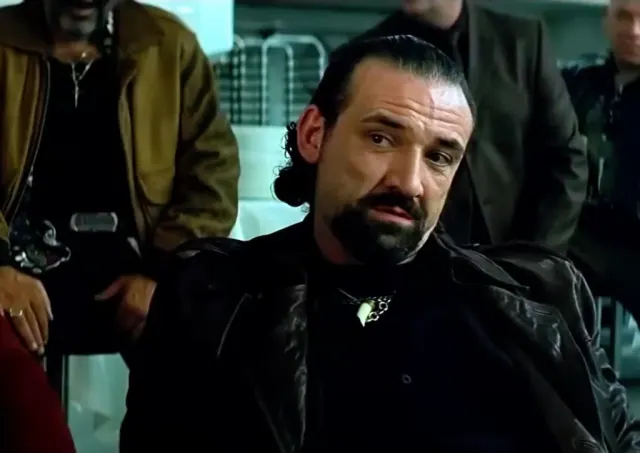
The Joker is negotiating with men who think they understand criminal business. They have money, people and an established way of operating. He arrives without treating their status as a reason to be polite. The pencil trick demonstrates that he can make a threat real before anyone has agreed to employ him.
His price then sounds absurdly large. Laughter is one response to that demand, but it isn't the only response on screen. The Chechen's stillness gives a viewer something different to notice amid the noise. The scene doesn't include an explanation of what he is thinking.
The Theory Supplies an Off-Screen History
The political reading imagines that a Chechen criminal might recognize a powerful newcomer demanding a large share of existing wealth. It draws a comparison with stories about Russian oligarchs and Vladimir Putin. That comparison is the theory's argument, not a fact established by the Batman film.
The character's credited name doesn't prove that he personally experienced a particular political event. Nor does the Joker's demand establish a documented rule that real oligarchs paid exactly half their fortunes. Using those assumptions as confirmed history would give the theory more certainty than its evidence supports.
You Don't Need That History to Read the Reaction
There is a simpler explanation available within the scene. The Joker has just shown that he is dangerous, and he is asking for an extraordinary amount of money without seeming embarrassed by it. A mobster could take the threat seriously without bringing a specific off-screen biography to the table.
That doesn't make the more elaborate interpretation worthless. It shows why several readings can fit the same performance. A quiet reaction shot gives an audience room to infer something, but the space for an inference isn't the same as confirmation of one.
The Later Money Scene Changes the Negotiation
Later, the Joker burns a large pile of cash in front of the Chechen. Money that looked like the point of their agreement becomes something he can destroy. He also takes control of the mobster's men and threatens their former boss.
The earlier demand for payment therefore wasn't a reliable guide to the kind of criminal relationship he intended. The men were dealing with someone who could use their interest in money against them while pursuing something else. You can follow that reversal directly from the film without resolving the political theory.
The Threat Is Part of the Fiction
The Joker's reference to the Chechen's dogs has also been read as another political allusion. Again, that requires an extra interpretive step. The words function as a threat in the scene even if a viewer has never encountered the proposed real-world comparison.
It is possible to discuss an apparent parallel without saying that Nolan intended it. A claim about an author's intention needs evidence from the writer, director, script or production record. The fact that a theory is detailed or widely shared doesn't supply that evidence by itself.
A Useful Reason to Watch the Meeting Again
The theory's most persuasive contribution may be where it directs your attention: away from the pencil and toward the people sitting around the table. Watch who laughs, who answers and who begins to lose control of the conversation. Those choices are present in the scene. The history a fan builds around them remains a reading of the film.