
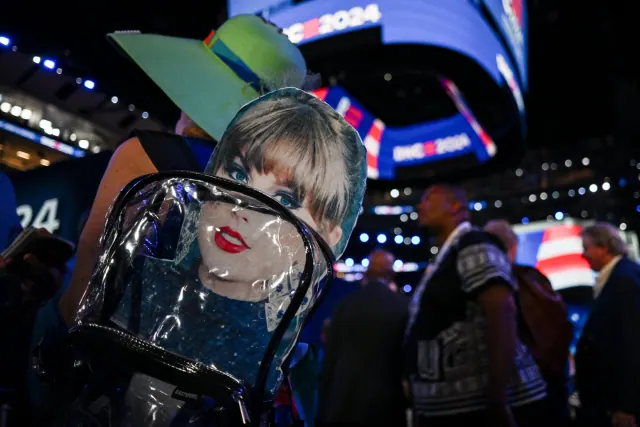
After the presidential debate on September 10, 2024, Taylor Swift posted her decision on Instagram: she would vote for Kamala Harris and Tim Walz. She also addressed a false impression created by AI images that had circulated on Donald Trump’s site, suggesting she endorsed him. She wanted her own choice to be clear.
The post belonged to that election and came in her words. It quickly crossed entertainment and campaign coverage while raising questions about synthetic political images. Those were connected stories, but they did not all establish the same thing about how much influence a celebrity endorsement had on voters.
The statement came from Swift herself
Swift described the qualities she valued in Harris and noted Walz's record on issues she supported. She told readers to do their own research and make their own choice, while making her intended vote clear.
That gave people an original statement to check against the images circulating online. A celebrity's face in a campaign-style graphic is not equivalent to an endorsement from the person. Here, the difference was especially visible because the real statement contradicted the false one.
The statement's date matters when it is shared again. It concerned the Harris–Walz ticket in 2024, not an endorsement of a candidate in a later election.
Why the AI pictures were part of the story
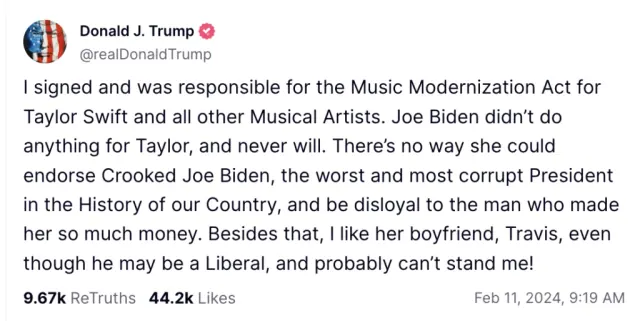
Trump shared posts in August 2024 that included a generated picture of Swift dressed in an Uncle Sam-style outfit. The message suggested she wanted votes for him. In her later statement, Swift named the false endorsement as a reason her concerns about AI and misinformation had grown.
Her words supplied the response. There was no need to infer it from an anonymous report or a photograph. At the same time, the wider collection of images need not all have had one origin or represented the views of real people shown in other pictures.
A striking fake can keep circulating after it has been corrected. Pointing back to the person’s original statement helps readers check what was actually said, rather than treating the repeated graphic as the endorsement.
She had spoken about elections before
Swift had backed Democratic candidates in Tennessee in 2018, speaking against Marsha Blackburn, and supported Joe Biden and Kamala Harris in 2020. Her 2024 endorsement followed those earlier public choices rather than marking her first statement about politics.
That history gave people a reason to watch for what she would say. It did not show private coordination of every later decision with a campaign, and more attention did not automatically mean more votes.
Blackburn won the 2018 Tennessee Senate race. The result is a reminder of the distinction: an artist’s endorsement makes their preference known, while the election depends on the people who vote.
The signature and the cat
A photograph of Swift holding a cat accompanied the endorsement. She signed off by describing herself as a childless cat lady, referring to the political argument surrounding resurfaced remarks from JD Vance, Trump’s running mate.
The joke was part of her presentation, but it did not leave the vote to be decoded. Harris and Walz had already been named in the statement. Readers could check the direct words instead of guessing a candidate from a photograph.
It was Swift’s own response. That does not make a family status or a fondness for pets a political test for everyone else, or mean all people described by an insult share one view.
Musk's reply was a separate post
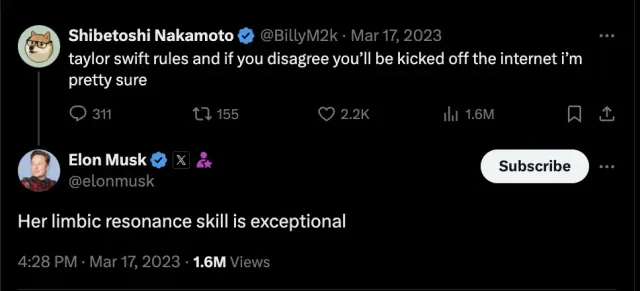
Elon Musk responded on X with an offer to give Swift a child and protect her cats. The wording drew attention as another reaction to the endorsement. It did not establish a relationship, a conversation with Swift or an agreement of any kind.
A public reply can be reported as something its author posted. It cannot tell a reader what the recipient privately thought or require an invented response from her. The original post, rather than a reconstruction of an exchange that never appeared, is the relevant record.
Campaign merchandise followed
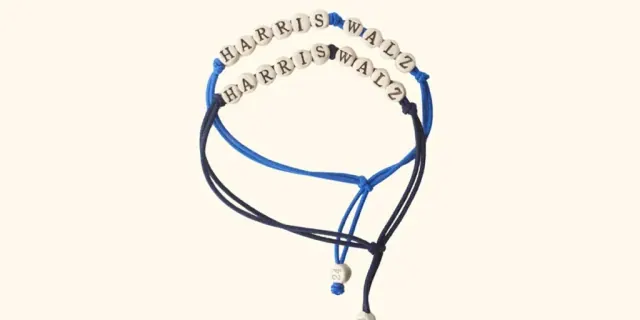
Friendship bracelets appeared in Harris–Walz campaign merchandise, using an accessory familiar from Swift’s Eras Tour audience. The retained archive image shows that campaign product. It documents what the campaign marketed, rather than proving Swift designed or approved it herself.
A sales claim, a registration figure and an election result each need their own evidence. How quickly an item sold, how many people visited a site and how many registered are different measurements. None, on its own, establishes how people voted or how many votes an endorsement caused.
From a celebrity link to official information
The next step in Swift’s post was voter-registration information. For an actual registration check, Vote.gov points to the rules and resources of a person’s state or territory. Deadlines, eligibility and methods come from the relevant election authority.
The U.S. Election Assistance Commission provides state and local resource links too. Check current official information there rather than relying on a social-media instruction from the 2024 election. The applicable options depend on the place and the election.
What made the moment notable
Swift made a political choice public while responding to a false image that claimed to speak for her. Her statement supplied direct words to check against a circulating screenshot. Merchandise, jokes and replies then became parts of the story as other people used the announcement.
That is enough to explain why the moment drew attention. It does not require a claim that her endorsement decided the election. The supported account is her September 2024 statement, the misinformation she addressed and the public reactions that followed.