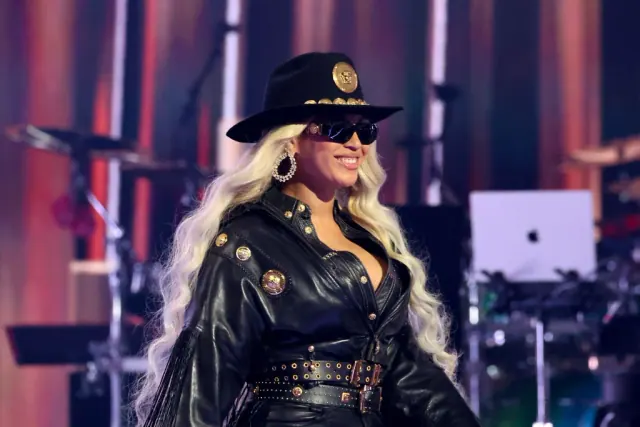


When the Country Music Association announced its 2024 award nominations, Beyoncé wasn't on the list. Cowboy Carter had already made a substantial impact that year, and the absence prompted discussion about how country music recognizes artists and decides who belongs within its boundaries.
Several different questions became tangled together: the album's commercial performance, radio programming, voting rules and Beyoncé's own description of an earlier unwelcoming experience. Looking back at each one separately gives a clearer account than treating the nominations as a single verdict on the music.
A Country Connection Before Cowboy Carter
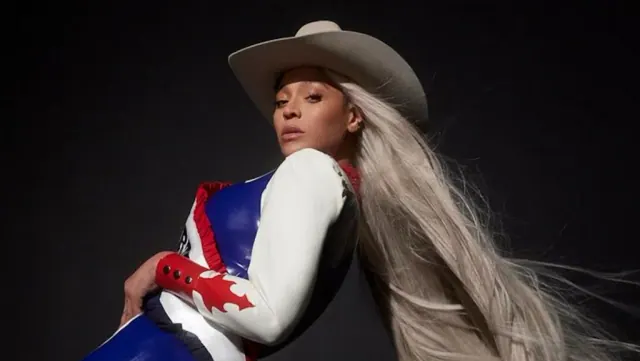
Beyoncé performed Daddy Lessons with the Chicks at the 2016 CMA Awards. The song had appeared on Lemonade, and the performance brought her country influences to that particular awards stage years before Cowboy Carter arrived.
Responses were mixed. Some viewers welcomed it, while others questioned her place at the event. The existence of that criticism doesn't tell us what every country listener thought, or establish how individual CMA members later voted. It does explain why the 2016 appearance returned to the conversation in 2024.
What Beyoncé Said About the Album
In her March 2024 announcement, Beyoncé described making the project after an earlier experience in which she had not felt welcome. She also described studying country music's history. Many people connected those comments to the 2016 awards performance, but that connection should remain identified as an interpretation unless she names the event herself.
Her account helps explain the project from her perspective. It doesn't require every track to fit one genre label, or make a country award the only meaningful measure of its reception. The album itself includes different musical references and collaborators rather than a single narrow sound.
The Chart Milestone Needs Its Correct Name
Texas Hold 'Em reached number one on Billboard's Hot Country Songs chart in February 2024, making Beyoncé the first Black woman to lead that chart. Hot Country Songs combines several forms of music consumption. It is different from Billboard's Country Airplay chart, which tracks radio play.
That distinction matters in a debate that often moves between sales, streaming and radio as though they were one measurement. A record can be successful with listeners while still prompting arguments over how particular stations program it. Neither observation, by itself, explains an awards ballot.
The Radio Dispute Was a Specific Incident
A request to an Oklahoma country station became part of the early Texas Hold 'Em discussion after a response circulated online. Arguments followed about genre, distribution and how stations receive new music. It was one episode in the song's release, not proof that every country station had taken the same position.
An initial programming response also shouldn't be frozen into a claim about what a station always played afterward. The broad question of access deserves a more careful account than one social post can provide. The original post is retained below as part of the contemporary conversation, rather than a current survey of radio policy.
Award Eligibility Isn't a Nomination
The CMA's nominations are determined through its membership and voting process, with category-specific eligibility rules. Meeting an eligibility threshold does not automatically place an artist on the final list. Nor do chart positions alone show how members evaluated the eligible work.
Those distinctions prevent two opposite overstatements. Commercial success doesn't make a nomination compulsory under every voting system. But explaining that a vote has rules also doesn't prove that questions about bias or belonging are unfounded. The published nominees tell us the result, not each voter's motives.
Keep the 2024 Result in Its Own Year
This was the discussion surrounding the 2024 CMA nominations. It wasn't a prediction that Beyoncé could never win an award for country music, or a summary of all later recognition. Different awards use different memberships, categories and procedures, so their outcomes shouldn't be treated as interchangeable.
For listeners, the album remains available independently of that year's shortlist. Its place in the conversation comes from the music, its collaborators and the history it brought people back to, as well as from the industry response. The debate is more useful when those subjects remain visible, rather than being reduced to a guess about one missing name.